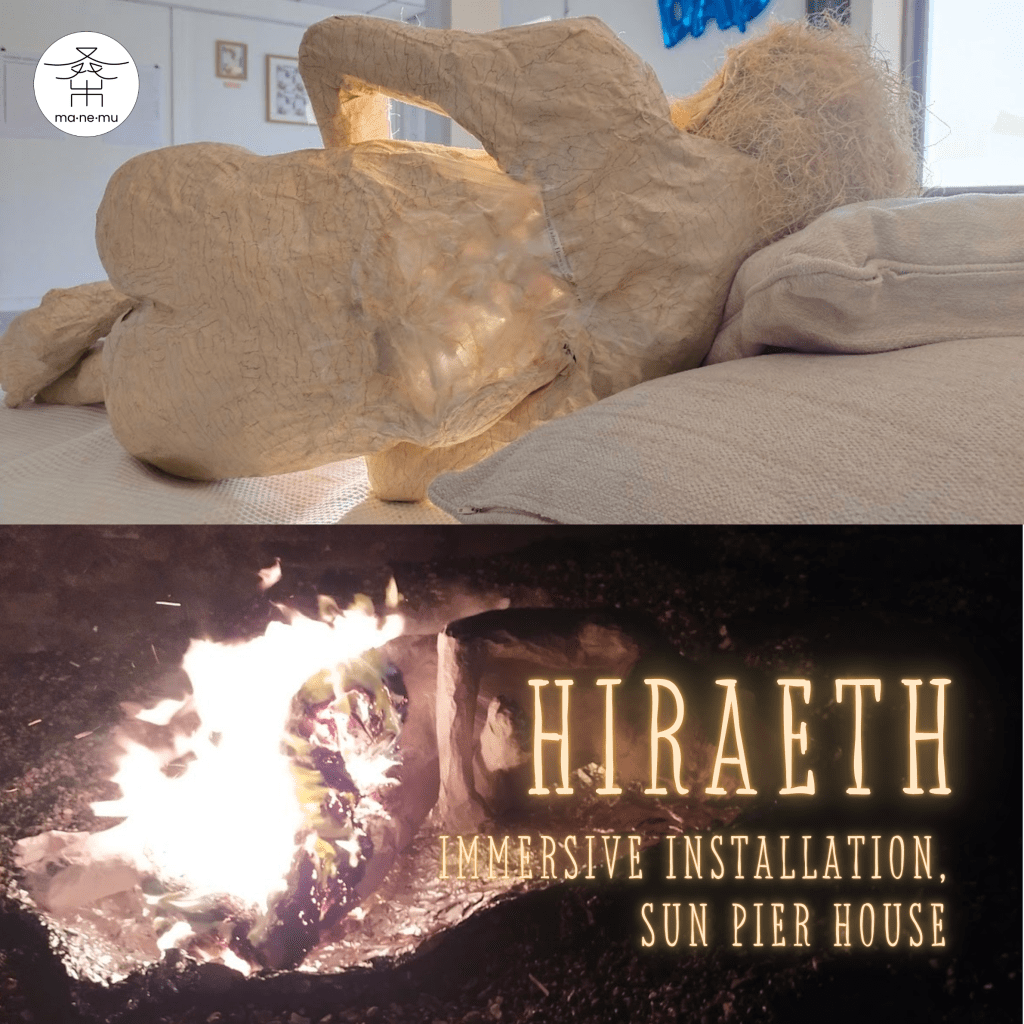
Hiraeth – an immersive installation incorporating performance, sculpture, sound, smell and features of the location to process a sense of insatiable longing for home.
Hiraeth is a Welsh word for the specific longing for home where return is impossible.
Held in August 2023, at Sun Pier House, this solo exhibition concluded my Studio Artist Bursary there.
It took me approximately 5 months to make this sculpture of my dad at his time of death, aged 75. It took about 5 minutes to decide on the topic for the show that would conclude my bursary at SPH when I was asked. It couldn’t really be anything else. I was estranged from my dad as a small child and when I found him again he was 74, living with dementia in a care home. In the 18 months between finding him and losing him for a second time, there was one visit that I nearly walked out of his room because it was difficult to perceive his slight form curled up within his bed clothes. This sculpture showed how slight, how diminutive I found him. Being the same height as him, I made the skeletal structure with my own limbs as the measure. Before the flesh and skin layers, the process was indistinguishable from making my own skull and skeleton in paper.
This sculpture was my second portrait in paper sculpture, a life-sized human form. As a deeply personal piece, the making itself was a performance in recreating what is lost and letting it go again. The installation allowed me to show elements of a half-remembered / half-reclaimed past and the people in it. Drawings of ancestors pasted to pillars in the space kept vigil over the sculpture on its bed. At one point the police came in for a look because of the realism of the figure viewed from the pier. For the conclusion of the exhibition, I completely stripped the space of everything but a jar of ashes. Here again, as with Love that Cannot Be Taken Away (2007), I could not have kept the recreated form of my dad with me.
In the grip of loss I made it, and by my own hands I reduced it to something more portable. I burned the sculpture, along with over a dozen secret mini-installations within the sculpture. These are fully recorded but yet to be displayed. It’s been two years since the making to writing this description and I still find it challenging to share the details of the making process that took place mostly behind closed doors, alone, in the evenings. One day it will all be shown, but for now, just the form and the inevitability of fighting loss.
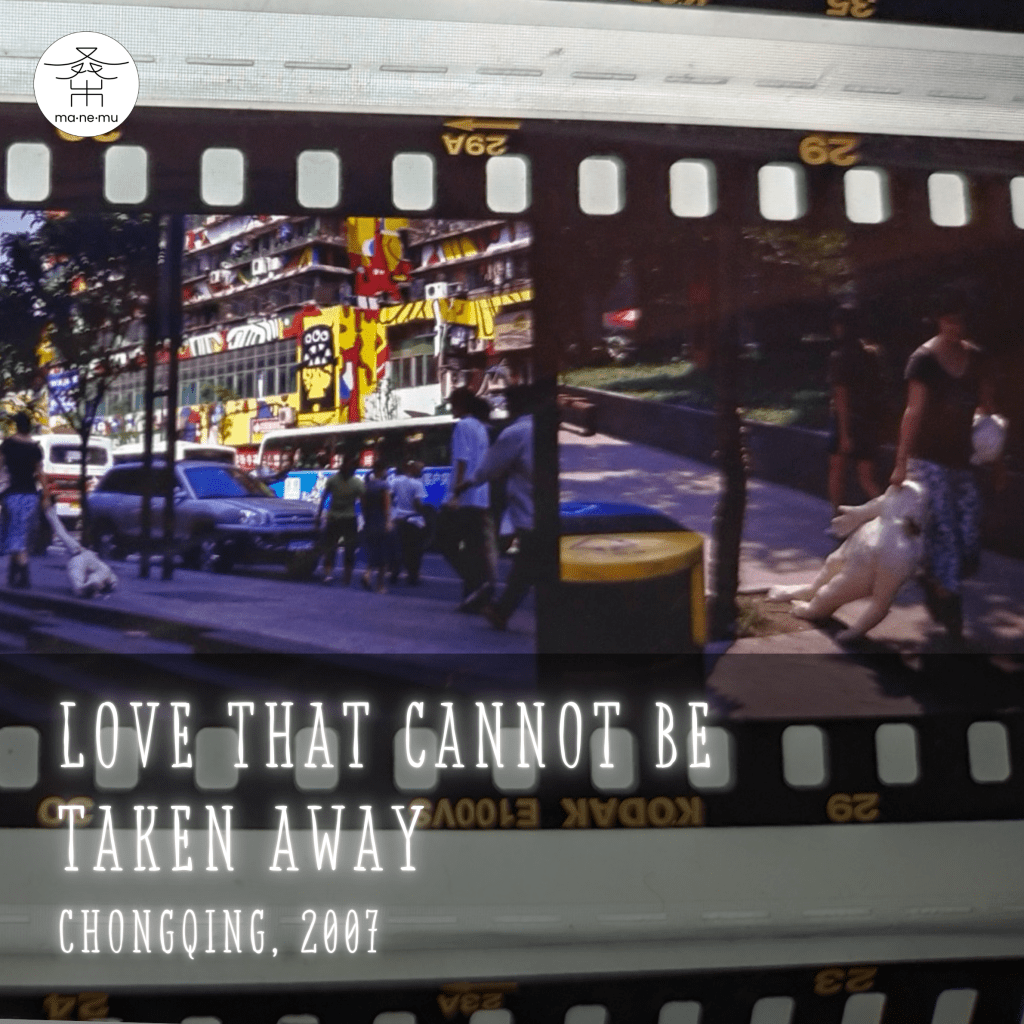
Love That Cannot Be Taken Away was my first installation / performance piece and was conducted in 2007 in Chongqing, China. I dragged this life-size sculpture through the streets of Huangjueping, accelerating its inevitable destruction because keeping it any longer became impossible. With bones of cardboard tubes, packing paper for flesh and fine calligraphy paper for skin and hair, the piece took approximately 2-3 months to make.
The first time that I sculpted an entire human form from paper. The planned installation was overtaken by a cross-country relocation. The sculpture that was intended to explore themes of love and attachment could not be taken away, forming the pun that would become titular.
Similarly to later of my installation pieces, the conclusion was the destruction of the work. The process of making and then unmaking with my own hands is a thread that is woven throughout my 3D work.
Later in my post-grad research I would come across a tale of women’s work within ancient Chinese philosophy. Mencius demonstrated a lack of commitment to his studies as a youth, before becoming the most significant Confucian philosopher, second only to Confucius himself. To make a barely audible point, Mencius’ mum watched him walk in to the house, knowing he’d skipped class again. She stood up from her weaving work that took days and weeks to make and calmly cut it into pieces in front of him, without saying a word. (N.B. this is an openly highly dramatised and idiosyncratic re-telling). This early recorded piece of performance art by a lesser known female artist is credited with producing one of the best known philosophers of his age. Young Mencius was struck by her destroying her hard work and had a powerful epiphany.
Making and destroying what I meticulously made can reasonably be described as a theme in my installation/performance work. Such themes emerge over time and accumulation of the art that makes our hearts beat.
 Manemu